
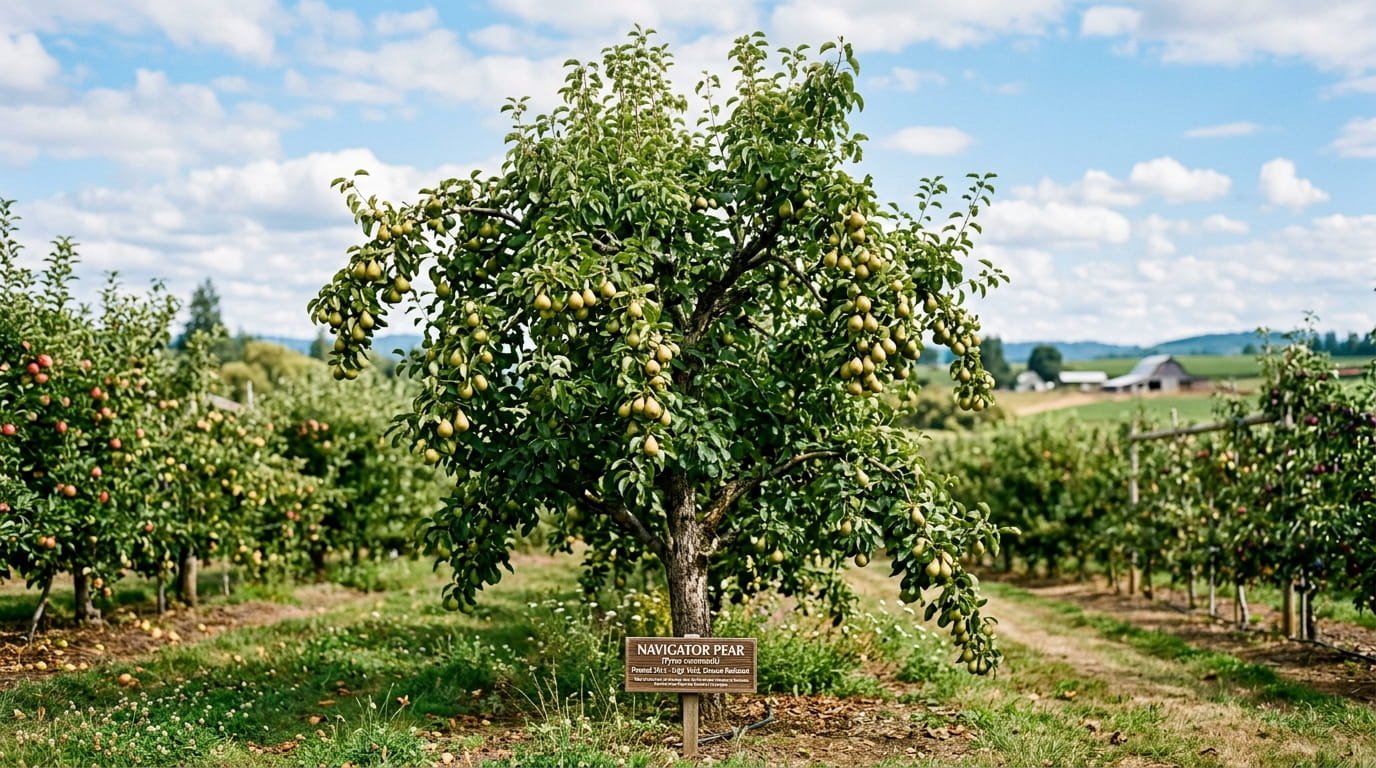
Navigator Pear Tree: Care, Growth, Fall Colors & Landscaping
Among the many trees used in ornamental landscaping, the Navigator Pear is a cold-hardy ornamental pear tree known for its white spring blossoms, glossy green foliage, vibrant autumn colors, and strong pyramidal shape. Unlike fruiting pear trees, the Navigator Pear is grown mainly for landscape beauty, seasonal interest, and low-maintenance care, making it a popular choice for residential gardens and urban landscapes.
This ornamental tree stands out for its elegant appearance and year-round visual interest. The tree performs especially well in cold climates and adapts easily to different soil conditions, making it a reliable option for residential landscapes, streetscapes, and modern gardens.
Its disease-resistant structure, balanced growth habit, and consistent seasonal beauty make the Navigator Pear one of the best low-maintenance ornamental trees for long-term landscape appeal.
Table of Contents
What Is a Navigator Pear Tree?
The Navigator Pear, also known as Pyrus ‘Navigator’, is a deciduous ornamental tree developed for landscape beauty rather than fruit production. Although it produces small ornamental pears, the fruit is inedible and mainly serves decorative purposes.
This hardy ornamental tree is valued for its strong branch structure, glossy foliage, and excellent cold hardiness. Its upright pyramidal shape makes it suitable as a garden feature tree, privacy screen, shade tree, or streetscape planting.
Many horticulture experts appreciate the Navigator Pear because it combines ornamental gardening appeal with strong adaptability. It handles urban pollution, variable weather, clay soil, sandy soil, and colder USDA hardiness zones better than many traditional ornamental pear varieties.
Origins and Development of the Navigator Pear
The Navigator Pear was developed through specialized horticulture breeding programs focused on creating cold-hardy ornamental trees with stronger disease resistance and improved landscape performance.
Research institutions such as University of Minnesota have contributed to the development of hardy landscape plants designed for northern climates. Breeders aimed to create an ornamental pear tree with beautiful spring floral displays, reliable fall foliage, and fewer structural problems than older ornamental pear varieties.
Unlike some ornamental pears known for weak branch structures, the Navigator Pear features a strong central leader and well-spaced branches. This improves storm resistance and reduces the need for extensive tree pruning.
Key Features of the Navigator Pear Tree
White Spring Blossoms
One of the most attractive features of the Navigator Pear tree is its breathtaking spring blossoms. In mid-spring, the tree becomes covered in clusters of white flowers that brighten the entire landscape.
These blossoms not only improve garden aesthetics but also support pollinator-friendly landscaping by attracting bees and other beneficial insects. The spring floral display often appears before the foliage fully develops, creating a dramatic ornamental effect.
Glossy Summer Foliage
During summer, the Navigator Pear develops glossy green foliage with dense canopy coverage. The waxy leaves resist many common foliar diseases and maintain their healthy appearance throughout the growing season.
This dense foliage also creates excellent shade, making the tree useful for residential landscaping and outdoor comfort.
Vibrant Autumn Colors
The Navigator Pear becomes especially impressive during autumn. Its glossy green leaves transform into a mix of yellow, orange, red-purple, and bronze tones.
These vibrant autumn colors make the tree a standout feature in seasonal landscape design. Many homeowners choose the Navigator Pear specifically for its long-lasting fall foliage and year-round visual interest.
Elegant Winter Structure
Even in winter, the tree remains visually appealing. Its textured bark, upright pyramidal shape, and strong branch structure create beauty in dormant landscapes.
Because of its balanced form, the tree continues adding structure and elegance to gardens during colder months.
Mature Size and Growth Rate
The Navigator Pear tree usually reaches a mature height of 25 to 30 feet with a spread of 15 to 20 feet. It has a moderate growth rate and typically grows around 1 to 2 feet per year once established.
Its compact ornamental tree structure makes it suitable for medium-sized yards, urban landscapes, and modern residential landscaping projects.
| Feature | Description |
| Tree Type | Deciduous ornamental tree |
| Mature Height | 25 to 30 feet |
| Mature Spread | 15 to 20 feet |
| Growth Rate | Moderate |
| Foliage | Glossy green leaves |
| Fall Color | Yellow, orange, red-purple |
| Flowers | White spring blossoms |
| Fruit | Small ornamental pears |
| Structure | Strong pyramidal shape |
| Hardiness | USDA Zones 3–4 |
How to Plant a Navigator Pear Tree
Choose the Right Location
The Navigator Pear grows best in full sun and requires at least six hours of direct sunlight daily. Proper sun exposure improves flowering, foliage quality, and fall color intensity.
The tree adapts to various soil conditions, including clay soil and sandy soil, but performs best in well-drained soil with a neutral pH.
Organizations like USDA Natural Resources Conservation Service provide useful guidance for evaluating soil drainage and landscape conditions before planting.
Planting Steps
Planting the Navigator Pear correctly helps establish healthy root development and long-term tree resilience.
- Dig a planting hole two to three times wider than the root ball.
- Position the root ball level with the surrounding soil.
- Backfill using native soil.
- Water deeply after planting.
- Apply organic mulch around the base while keeping mulch away from the trunk.
Mulching helps regulate soil temperature, retain moisture, and suppress weeds around young trees.
Navigator Pear Tree Care and Maintenance
Watering
Young trees require regular watering during the first growing season to establish a strong root system. Once established, the Navigator Pear becomes relatively drought tolerant.
Deep watering during prolonged heat periods helps maintain healthy foliage and seasonal performance.
Fertilizing
Most Navigator Pear trees require minimal fertilization. If soil quality is poor, a balanced slow-release fertilizer can be applied in early spring.
Resources from the Arbor Day Foundation recommend avoiding excessive fertilizer use because it may encourage weak growth.
Tree Pruning
The Navigator Pear naturally develops a tidy shape and requires limited pruning. Basic tree maintenance usually involves removing damaged, dead, or crossing branches during late winter or early spring.
Its strong branch structure makes it more resilient than older ornamental pear cultivars.
Disease Resistance and Common Problems
The Navigator Pear was bred to improve disease resistance, but like most ornamental trees, it can still face occasional challenges.
Fire Blight
Fire blight is one of the most common issues affecting pear trees. This bacterial disease causes branches to appear burned or blackened.
Although the Navigator Pear offers improved resistance, infected branches should still be pruned quickly to prevent spreading.
Aphids and Garden Pests
Aphids sometimes appear on ornamental pear trees during warmer months. These pests are usually manageable through natural predators or basic insecticidal treatments.
Healthy watering practices, proper pruning, and good airflow also reduce pest problems.
Navigator Pear vs Fruiting Pear Trees
Many people confuse ornamental pear trees with edible fruiting pear trees. However, their purposes are very different.
| Ornamental Pear Tree | Fruiting Pear Tree |
| Grown for landscape beauty | Grown for edible fruit |
| Small inedible pears | Large edible pears |
| Focus on flowers and foliage | Focus on fruit production |
| Used in landscaping | Used in orchards and gardens |
| Lower maintenance | Higher fruit care needs |
The Navigator Pear is primarily designed for ornamental landscaping and seasonal beauty rather than food production.
Why Landscapers Prefer the Navigator Pear
Modern landscapers often select the Navigator Pear because it combines beauty, durability, and low-maintenance care in a single tree.
Its year-round interest, strong pyramidal shape, cold hardiness, and urban pollution tolerance make it suitable for:
- Residential landscapes
- Streetscape projects
- Public parks
- Garden focal points
- Privacy screening
- Sustainable landscaping
The tree also supports pollinator-friendly environments while maintaining excellent visual appeal throughout every season.
Environmental Benefits of the Navigator Pear
The Navigator Pear contributes positively to urban forestry and sustainable landscaping. Its dense canopy provides shade, supports ecosystem health, and improves landscape biodiversity.
Organizations such as the U.S. Forest Service encourage planting resilient landscape trees that can tolerate changing environmental conditions and urban development.
Because of its adaptability and disease resistance, the Navigator Pear fits well into environmentally conscious landscaping strategies.
Conclusion
The Navigator Pear is one of the most reliable ornamental pear trees for modern landscapes. Its white spring blossoms, glossy summer foliage, vibrant autumn colors, and elegant winter structure provide year-round beauty with minimal maintenance.
With strong cold hardiness, adaptable soil tolerance, disease resistance, and excellent landscape value, the Navigator Pear continues gaining popularity among homeowners, landscapers, and horticulture professionals. Whether used as a feature tree, shade tree, or ornamental landscape centerpiece, it offers long-lasting beauty and dependable performance in nearly every season.
FAQs About Navigator Pear
Is the Navigator Pear tree messy?
The tree produces small ornamental fruit, but cleanup is usually minimal compared to traditional fruiting pear trees.
Can you eat Navigator Pear fruit?
No. The fruit is small, hard, and inedible. The tree is grown mainly for ornamental landscaping purposes.
How fast does the Navigator Pear grow?
It has a moderate growth rate of about 1 to 2 feet per year after establishment.
Is the Navigator Pear good for cold climates?
Yes. The tree is known for excellent cold hardiness and performs well in USDA Zones 3 and 4.
Does the Navigator Pear need a pollinator tree?
No. Since the tree is ornamental and not grown for fruit production, a second tree is unnecessary.
Does the Navigator Pear have thorns?
No. This is a thornless ornamental pear variety suitable for residential gardens and family landscapes.