
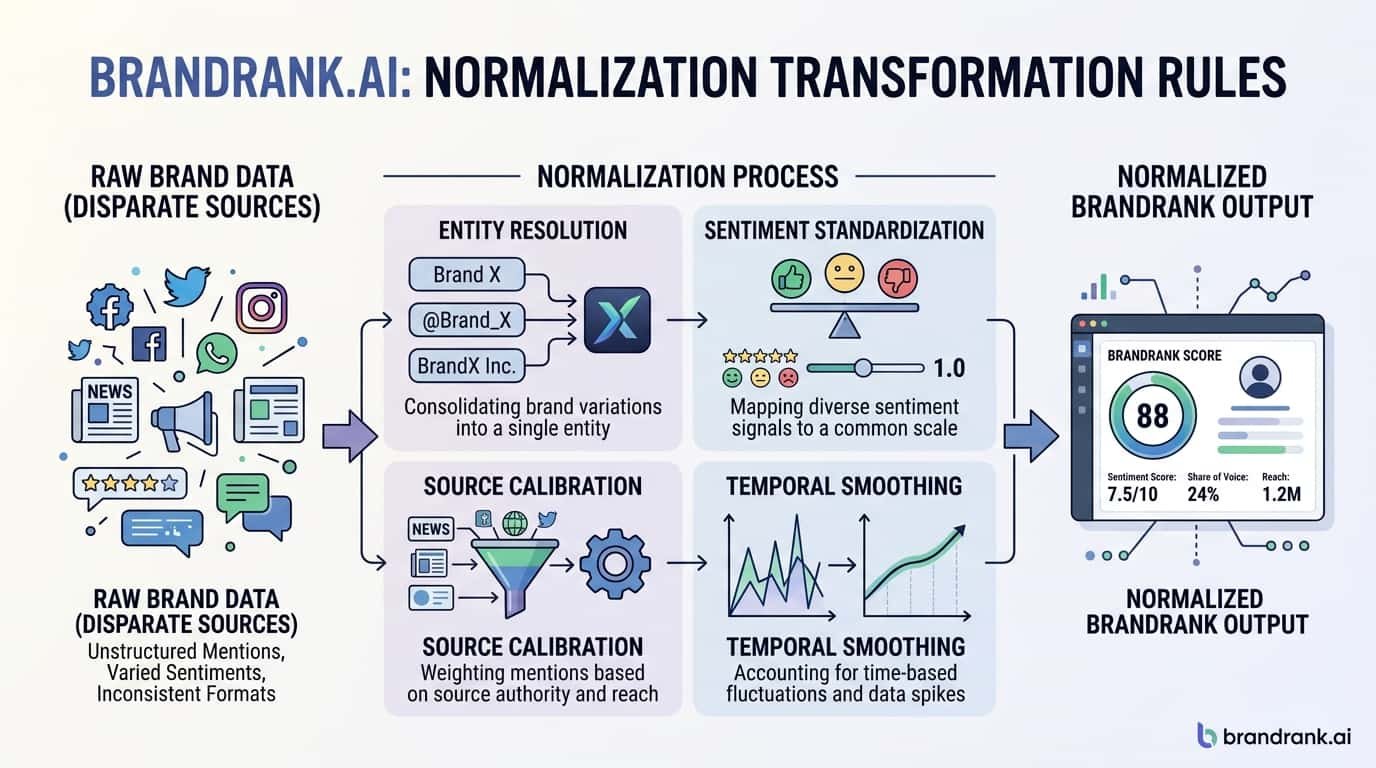
BrandRank.ai Normalization Transformation Rules: Why They Matter in the Age of AI Search
As artificial intelligence continues to reshape the way information is discovered online, businesses are facing a new challenge: ensuring their brand is recognized consistently across every digital touchpoint. This is where brandrank.ai normalization transformation rules become increasingly important. These rules help standardize brand data, improve entity recognition, and strengthen visibility across modern AI search systems.
Today, AI platforms do not simply read content the way humans do. They process information through tokens, embeddings, vector similarity, and pattern recognition models. Even minor differences in a brand name can create confusion, leading to fragmented identities across search engines, AI assistants, and recommendation systems. A strong normalization framework helps eliminate these issues and creates a unified digital presence.
Table of Contents
Understanding BrandRank.ai Normalization Transformation Rules
The concept behind brandrank.ai normalization transformation rules is simple but powerful. It focuses on transforming inconsistent brand information into a standardized format that AI systems can easily understand.
Modern organizations publish information across multiple channels, including websites, CRM systems, social platforms, APIs, and various digital applications. Over time, these sources often create different versions of the same brand identity. AI systems may interpret each variation as a separate entity, reducing overall visibility and authority.
Normalization creates a single canonical identity by cleaning, organizing, and standardizing brand information. This process improves semantic consistency, making it easier for AI models to connect all references to the same organization.
The Role of Data Normalization in AI SEO
Traditional SEO focused heavily on keywords and backlinks. However, AI SEO strategies now rely on accurate entity resolution and contextual understanding.
When AI models analyze content, they attempt to identify relationships between brands, products, services, and topics. If a brand appears with inconsistent formatting, the model may split that information into multiple data clusters.
By applying data normalization, businesses create a stronger signal for AI systems. This leads to improved:
- Brand visibility
- Brand authority
- Search rankings
- AI-generated recommendations
- Share of voice
- Digital relevance
As AI-powered search becomes more sophisticated, consistency becomes one of the strongest competitive advantages available.
Core Components of Brand Normalization
Case Normalization
One of the most basic but essential transformation processes is case normalization. Brands may appear in uppercase, lowercase, or mixed formats across different platforms.
Standardizing text formatting ensures that AI systems recognize all references as the same entity. This reduces ambiguity and improves semantic accuracy.
Legal Suffix Removal
Many companies include legal identifiers such as LLC, Inc., Ltd., or Co. While important for legal documentation, these additions rarely provide value for AI interpretation.
Removing unnecessary suffixes helps create cleaner and more consistent brand records, making entity recognition more efficient.
Special Character Standardization
Symbols, punctuation marks, and special characters can create unnecessary variations within brand datasets.
A structured special character cleaning process helps unify brand references and prevents AI systems from treating small formatting differences as entirely separate entities.
Whitespace Normalization
Hidden spaces and inconsistent formatting can negatively impact indexing and data processing.
Whitespace normalization ensures that information remains consistent across analytics systems, indexing systems, and AI platforms.
Domain Harmonization
Many brands operate across multiple domains and subdomains. Through domain harmonization and domain extraction, AI systems can identify the core brand identity rather than focusing on URL variations.
This creates stronger connections between websites, digital assets, and brand entities.
Entity Resolution and Semantic Consistency
A major objective of brandrank.ai normalization transformation rules is improving entity resolution.
Entity resolution helps AI systems determine whether different references represent the same organization, product, or service. Without proper normalization, similar brand mentions may be treated as unrelated entities.
Through synonym mapping, contextual analysis, and semantic modeling, AI systems can connect various references to a single authoritative entity. This improves understanding across search engines, AI assistants, and recommendation algorithms.
The result is greater consistency throughout the digital ecosystem.
How Vector Databases Support Brand Recognition
Modern AI platforms increasingly depend on vector databases and embeddings to understand meaning.
Rather than storing information as simple text, AI systems convert data into mathematical representations within high-dimensional spaces. These vectors allow machines to identify relationships between concepts based on contextual similarity.
When brand information is properly normalized before entering these systems, vector representations become more accurate. This improves:
- Brand recognition
- Semantic search optimization
- AI-generated answers
- Contextual recommendations
- Knowledge graph accuracy
Proper normalization ensures that AI models associate all relevant information with the correct brand identity.
Implementing Normalization Across Digital Systems
Successful implementation requires more than a single cleanup project. Effective normalization must operate throughout the entire digital infrastructure.
The process typically begins during data ingestion, where information from websites, APIs, CRM platforms, and other sources enters a normalization pipeline.
From there, data passes through multiple validation layers before reaching:
- Analytics systems
- Indexing systems
- Machine learning models
- AI search platforms
- Vector databases
This continuous approach ensures consistency across every stage of the data lifecycle.
Best Practices for Brand Data Standardization
Organizations seeking stronger AI visibility should follow several best practices.
Create a Unified Brand Framework
Maintain a master version of your brand identity that serves as the source of truth across all platforms.
Use Controlled Synonym Mapping
Implement structured synonym mapping rules to connect related terms without merging unrelated entities.
Monitor Entity Performance
Regular audits help identify inconsistencies before they impact search visibility.
Apply Confidence Scoring
Using confidence scoring allows organizations to measure the accuracy of entity matches and reduce false associations.
Maintain Version-Controlled Schemas
A version-controlled schema helps ensure consistency as brand data evolves over time.
These practices help maintain data integrity while supporting long-term growth.
The Future of AI Search and Brand Normalization
The future of search is increasingly driven by AI rather than traditional keyword matching. As AI systems become better at understanding context, brands must focus on creating clean, structured, and consistent data.
Brandrank.ai normalization transformation rules represent an essential framework for achieving this goal. By improving brand consistency frameworks, strengthening entity recognition, and supporting accurate semantic relationships, businesses can position themselves for greater visibility in the AI-driven digital landscape.
Organizations that prioritize normalization today will be better prepared for tomorrow’s AI ecosystems, where authority, trust, and contextual understanding determine success.
Final Thoughts
As AI search continues to evolve, consistent brand representation is no longer optional. Brandrank.ai normalization transformation rules help businesses create a unified digital identity, improve brand authority optimization, and strengthen performance across modern search environments.
From data normalization and entity resolution to vector embeddings and semantic consistency, every transformation contributes to a stronger and more recognizable brand presence. Companies that invest in these practices can improve visibility, enhance trust, and build lasting relevance in the rapidly changing world of AI-powered discovery.
FAQs
What are brandrank.ai normalization transformation rules?
They are structured processes used to standardize brand information, ensuring AI systems recognize multiple brand variations as a single entity.
Why is data normalization important for AI SEO?
Data normalization improves entity recognition, strengthens semantic consistency, and helps AI search engines accurately understand brand identity.
What is entity resolution?
Entity resolution is the process of identifying and linking different references that belong to the same brand, company, or organization.
How do vector databases support brand recognition?
Vector databases store embeddings that help AI systems understand semantic relationships and recognize brands even when exact text matches are unavailable.
Can normalization improve search visibility?
Yes. Proper normalization strengthens brand authority, improves AI interpretation, and increases the likelihood of appearing in search results, recommendations, and AI-generated responses.